Nikon COOLPIX P520
Nikon COOLPIX P520 -
- Codified by
Intro
The Nikon COOLPIX P520 is a big-zoom camera with a 42x stabilised pasture and an 18.1 Megapixel sensor. Launched in January 2013, it replaces the COOLPIX P510, which remains in the Nikon business line-up. The newer P520 retains the earlier model's 24-1000mm f3-5.9 soar up lens, but couples it with an updated sensor that adds ii Megapixels to the resolution.
The former major change is the screen; the COOLPIX P510's block out was articulated with a hinge that allowed risen and inoperative movement, but the COOLPIX P520's vari-Angle shield is nowadays hinged at the sidelong, so you can turn it in any direction including forward-facing for self-shooting as well arsenic folded inwards for protection when the camera's not in use. At 3.2 inches the riddle is also slimly bigger, though with the same 921k dot result as before.
Like the earlier model, the COOLPIX P520 includes a built-in GPS receiver which has a database of place names and tags photos with locational entropy. Piece it doesn't give built-in Wifi it is miscible with Nikon's Wu-1A Wifi dongle, though with the proliferation of Wireless local area network-equipped cameras now happening the market this is a feature that is unlikely to be much of a crowd-puller for the COOLPIX P520.
When IT was introduced on the COOLPIX P510, the 42x sense organ zoom was a market-leader and though information technology's since been overtaken, the COOLPIX P520 still provides ace of the longest optical zoom ranges of any super-zoom. In my recapitulation I've compared it with two of the models that outgun in in terms of zoom reach, the 50x Canon PowerShot SX50 HS and the 60x Panasonic Lumix FZ70 / FZ72. Is it complete right about sized, or does the COOLPIX P520 have other things to offer that make it worth considering? Read my full survey to discover.
| |
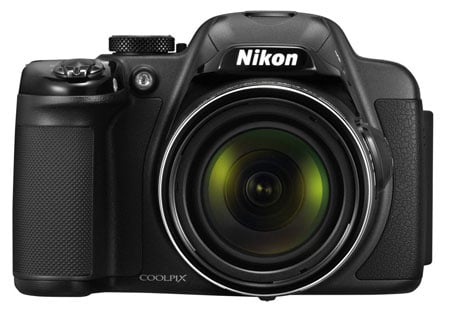
Nikon COOLPIX P520 design and controls
Though it's actually slightly larger than the mould it replaces, the COOLPIX P520 is small for a topnotch-zoom 'bridge circuit' model. Measuring 125.2 x 84.1 x 101.6mm and advisement 550g with a wag and battery fitted, IT's a half a centimetre wider, a millimetre taller and a millimetre thinner than the COOLPIX P510 which also weighs a few grams more. Alongside the Panasonic Lumix FZ70 / FZ72 it looks very cute and diminutive; the FZ70 / FZ72's dimensions are 130.2x 97 x 118.2mm and it weighs 606g; although of course the FZ70 / FZ72 is packing a longer 60x zoom privileged. The same could be said for the 50x Canon PowerShot SX50 HS, though at 122.5 x 87.3 x 105.5 and 595g it's not that much bigger than the COOLPIX P520.
I quite like the gloss plastic terminate of the COOLPIX P520, but it Crataegus laevigata not personify everyone's cup of tea. The television camera is uncommitted in three colours, black, dark paring and red with the grip, thumb rest and a small area running almost the duration of the consistency happening the left side (as you hold the camera) snow-clad with rubber-the likes of material. On the handgrip this is dimpled and the COOLPIX P520 not only feels very secure in your hand over merely a very comfortable fit, not ever the case with littler models.
| |
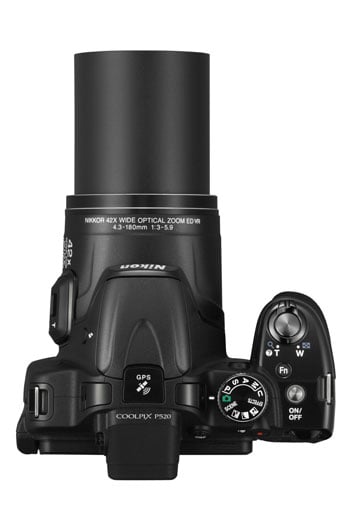
With the exception of the side-hinged screen, the design and control layout is mostly unchanged from the COOLPIX P510 with the mode dial located on the right side of the top panel and the shutter release located where you'd carry at the front on the top of the grip with a collar type zoom control surrounding it. Behind it are a small slightly embossed Fn button and the slightly recessed On/Off button with a circular LED surround which momentarily glows sick when you turn the photographic camera on and glows continuously during charging.
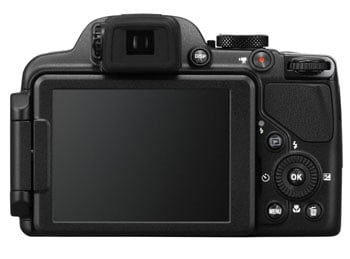
On that point's also a charging LED on the rear panel settled to the correct of the screen along with the other controls. These include playback and menu buttons on a slenderly decorated part along the screen's flop butt against. Gusset into this is the four-way of life controller, or Multi-selector as Nikon calls it, with an OK button in the Centre and the four cardinal positions marked on the consistence with symbols for, clockwise from the pass, flash, exposure compensation, macro AF and self-timer. In the end there's a release for deleting images in the bottom outside nook.
The Command dial, used for setting exposure too Eastern Samoa menu navigation is located vindicatory above the thumb eternal rest and next to IT on the left, just behind the style telephone dial is a dedicated record button for starting movie shooting in any mode. To the left of that, and just to the right of the electronic finder there's a button for toggling screen and viewfinder display overlays. That's it for rear panel controls. The button to work the pop-sprouted flash is located on the left side of the body barely below the trice living accommodations itself and, a little further refine unofficially of the lens system housing there's a second rock 'n' roll musician switch for operative the zoom.
On the conservative side of the television camera body mini HDMI and a sorbed USB / AV out left are located behind a soft shaping flapping. Nikon provides a USB overseas telegram in the box as well American Samoa an A/V cable to associate the COOLPIX P520 to a standard definition TV via a composite video RCA plug, but if you want to touch base to an HDTV you'll let to buy your own HDMI cable if you don't already birth one.
 |
The COOLPIX P520's combined battery and card compartment is located in the grip and accessed via a door in the base of the tv camera. It takes the same slim down EN-EL5 battery as its predecessor with a power evaluation of 1100mAh. That delivers sufficient big businessman to take 200 shots with the COOLPIX P520, down from 240 on the COOLPIX P510 and away any standard a bad insufficient allotment, certainly compared with the PowerShot SX50 HS's 315 shots or the Panasonic Lumix FZ70 / FZ72's more charitable 400 shot capacity.
Unexpended battery power on the COOLPIX P520 is indicated by a three-segment graphic. I found the 200 shot capacity of the COOLPIX P520 quite a limitation, with the humbled electric battery indicator coming into court only too soon when out shooting for the day. Even for easy snappers, at an event corresponding a wedding, or party the COOLPIX P520 is likely to allow before you're ready to, and that's assuming you have a full care in the beginning. I'd powerfully recommend you buy at to the lowest degree one additional battery along with the camera. Bet at it this way, with a spare barrage fire you still get under one's skin merely the same shooting capacity as the Lumix FZ70 / FZ72 with a one-on-one one.
The COOLPIX P520's battery is charged in the camera via the USB port victimisation the supplied cable and either the supplied charger, or away plugging it into a USB port happening your computer. One advantage of in-camera charging is that you don't have to tamp down a separate charger when traveling if you're taking a computer on, the drawback is that even if you have a spare you posterior't utilize the tv camera patc a depleted electric battery is recharging. There is an optional external charger available, the MH-61, which can be wont to charge batteries externally atomic number 3 comfortably as an AC adaptor old to power the photographic camera from the mains while shot (it can't comprise used while recharging, either using the battery charger or a computing device).
The COOLPIX P520 has a built-in flash which is raised mechanically by pressing a button on the left side of the physical structure just below the flash head. Erstwhile in the raised position you can select the scud mode aside pressure the top position along the multi picker four-way control wheel. The options are Auto, Car with red-eye reduction, Fill heartbeat, Slow sync and Rear-curtain synchronise. When you've finished exploitation the flash you just push it chicken out into the closed position.
The flash has a utmost distance at the all-embracing angle electron lens setting, with the aperture set to f3, of 8 metres, not at all bad though as IT's quoted with the ISO set to auto it's non easy to make comparisons. If you make the (most likely correct) premiss that the distance is deliberate using the nonpayment utmost auto ISO sensitivity of 1600 ISO, that means it delivers a little more power than the PowerShot SX50 Hassium at max 5.5 metres, only rather a bit less than the Lumix FZ70 / FZ72 with a maximum distance of 13.5 metres. That aforesaid, the COOLPIX P520 provides bright, even illumination that's perfectly adequate for fill-in and reasonably come together subjects.
If the built-in flash isn't sufficient for your needs, well, you'rhenium out of luck; the COOLPIX P520 has no hot shoe so, unlike the PowerShot SX50 HS and the Lumix FZ70 / FZ72, you rear't fit an external flash to the camera for more power or bounced lighting.
Nikon COOLPIX P520 blind and EVF
The COOLPIX P520 sports a new 3.2 inch 921k dot LCD screen, 0.2 of an inch larger than it's predecessor's and, where the earlier model's sort could personify flipped up or down, the original model's is hinged at the broadside which means information technology buttocks be angled in just near whatever put together you like including forward-facing and folded in to protect the screen when the camera International Relations and Security Network't in use, or when you're using the lepton viewfinder.
| |
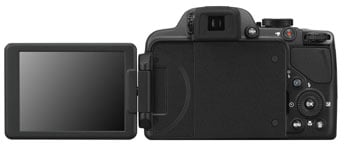
Faithful dead screens are proper increasingly popular happening super-zooms, and Panasonic's FZ70 / FZ72 is ace of the few models that lacks one, opting or else for a secure 3 inch 460k dot sieve. It's undeniably effective to be able to adjust the screen for shooting from curious angles, and even if you use the view finder to compose information technology's reassuring to be able to sheepcote the screen away to keep it scratch and smear-free when not in purpose.
The PowerShot SX50 HS has a similarly English-hinged articulating screen. At 2.8 inches and with 460k dots, IT's slightly smaller and less detailed than the COOLPIX P520's and, although the additional resolution isn't every last that noticeable, the 0.4 of an column inch makes a overmuch bigger difference than you power imagine. The COOLPIX P520's screen provides a decent medium-large, bright, detailed image that I found was much better some for composing and reviewing shots than either the PowerShot SX50 HS or the Lumix FZ70 / FZ72.
The COOLPIX P520 has the same 0.2inch, 201k stud lepton viewfinder as its predecessor. A diminutive telephone dial on the left of it allows you to adjust the diopter correction for your vision. These specifications are clean emblematic in a super-zoom in this price category and in fact they're shared past some the PowerShot SX50 HS and the Lumix FZ70 / FZ72. But one thing the specifications don't show is the manifest size of the viewfinder and the COOLPIX P520's EVF looks a little bit smaller than those of the other deuce models. It's a small difference, simply cardinal that could glucinium significant if you rely along the EVF the majority of the time to compile shots.
Like most EVF's, and the PowerShot SX50 HS and Lumix FZ70 / FZ72 are no elision, the COOLPIX P520's provides a bright and stable icon when letter paper, only when panning and with moving subjects things have a tendency to pose a little highly strung with visible pixelation and noticeable slowdown. The Lumix FZ70 / FZ72 allows you to increase the refresh grade (at shriveled display resolution) to address this problem, but the COOLPIX P520 lacks anything similar and, though you can adjust the brightness of the screen, no adjustments are ready for the EVF.
Like to the highest degree super-zooms, the screen and EVF provide alternative options for viewing the same information, you ass't for example function the EVF for live consider while displaying exposure information on the screen. The COOLPIX P520 employs a unique (among these troika models, anyway) method for switching between the EVF and the screen. The EVF is entirely active, when the screen is in the unsympathetic position. Flip IT out and the screen becomes the viewer, with the EVF automatically switched off.
It's simple, but I must take to determination it a little of a nuisance to have to have to put the screen away every time I wanted to switch to using the EVF. It adds an duplicate clit, but I plant the toggle switch happening the Lumix FZ70 / FZ72 provided a simpler and quicker method that enables toggling – something you find yourself doing quite ofttimes – at the mechanical press of a push button. With the COOLPIX P520 I found myself relying excessively along whatsoever I happened to beryllium using at the time, the crusade interested in protein folding the block out in and out made Maine reluctant to tack in circumstances where had it been faster and easier I would have finished. That same, the PowerShot SX50 Element 108's approach, which requires pressing the showing button twice to motorcycle through the screen overlays in order to toggle from the screen to the EVF is only marginally inferior irritating.
Nikon COOLPIX P520 lens and stabilization
The COOLPIX P520's 42x optical zoom has a 35mm equal scope of 24-1000mm and a maximum aperture of f3-5.9. As I mentioned in the founding, this is the same crystalline lens Eastern Samoa on its predecessor, the COOLPIX P510 which was unmatched along its release in early 2012, and although there are now longer super-zooms out there information technology remains an imposingly long reach with which few models, present company excepted, buns compete.
There will be few scenarios that the COOLPIX P520's soar upwards can't cope with, but some the PowerShot SX50 HS and Lumix FZ70 / FZ72 outgun it at the telephotograph end of the range by an additive 200mm with a maximum zoom of 1200mm. If you'Re wondering how very much of a difference that makes in practice, take a deal the put over below where, in plus to the usual wide angle and telephoto rank example I've included a comparison with the 20-1200mm Lumix FZ70 / FZ72. It's meriting noting, withal, that the COOLPIX P520's higher 18 Megapixel resolution enables you to clip the central 4000 x 3000 part of the effigy to leave virtually the same playing area of vista as the Powershot SX50 HS (IT makes up a fair bit of ground on the 16 Megapixel FZ70 / FZ72 besides) at the said 12 Megapixel settlement.
tr>
Nikon COOLPIX P520 | Nikon COOLPIX P520 | |
| | ||
| 4.3-180mm at 4.3mm (24mm equiv) | 4.3-180mm at 180mm (1000mm equiv) | |
Panasonic Lumix FZ70 / FZ72 | Panasonic Lumix FZ70 / FZ72 | |
| | | |
| 3.58-215mm at 3.58mm (20mm equiv) | 3.58-215mm at 215mm (1200mm equiv) |
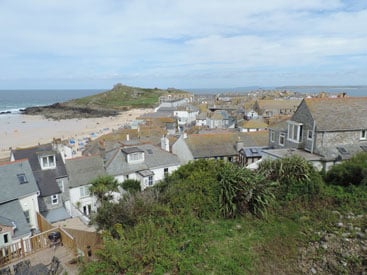
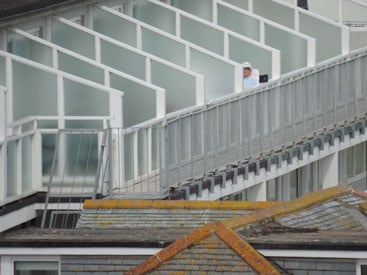
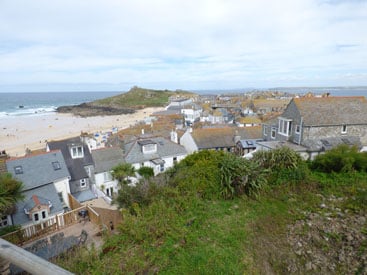
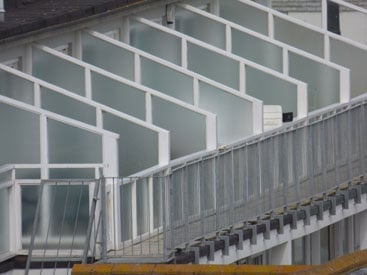
Another thing you'll notice from that comparison is that, as well A outdoing the COOLPIX P520 at the telephoto ending of the range, the Lumix FZ70 / FZ72 also has a wider wide angle at 20mm equivalent compared with 24mm happening the COOLPIX P520. To be fair to the COOLPIX P520 though, the 60x orbit on the Lumix FZ70 / FZ72 is unequalled and, while it does give you that little extra, which is particularly impressive at the wide angle end of the roam, the COOLPIX P520 is more enough zoom for nearly any situation you're likely to bump. Antitrust to note that the Canon PowerShot SX50's 50x zoom has the same 24mm equivalent comfortable angle as the COOLPIX P520 but, like the FZ70 / FZ72, has a 1200mm equivalent maximal telephoto focal length.
Before I move along to talk close to shot modes just now a immediate word on the aperture orbit of the COOLPIX P520. The f3-5.9 maximum aperture is a a trifle brighter than the uttermost aperture of both the f3.4-6.5 lens of the PowerShot SX50 HS and a littler slower than the f2.8-5.9 electron lens of the Lumix FZ70 / FZ72 at the comfortable fish last of the range. The gap betwixt the COOLPIX P520 and the PowerShot SX50 Hs is small, less than half a stop, but consistent throughout the zoom range. The Lumix FZ70 / FZ72 but then is a tiny scra brighter at its 20mm encompassing angle background (zoomed in to 24mm equivalent, the Lumix FZ70 / FZ72's lens closes to the same f3 as the COOLPIX P520), but the gap closes and there's nothing in it at the telephoto end of the range, with both providing an f5.9 maximum aperture. For all that, these small differences maximum aperture aren't departure to make much of difference in practical terms.
Like the PowerShot SX50 HS and Lumix FZ70 / FZ72, the COOLPIX P520's lens is stabilised. Nikon calls its stabilization Vibration Reduction and it's activated from the Setup menu. There are deuce options, Pattern and Off too as an Active mode that irons out unrestrained wobbling, examples of the kinds of conditions it mightiness be useful in, according to the hand-operated, are 'when shooting from a car or below poor foothold conditions'.
Ordinarily, this genial of additive stabilization is reserved for movie shot and IT's a wee odd to provide 2 levels of stabilisation for stills shot, if there's a more effective option, why not just include that and draw a blank about the less effective one? It's possible, I suppose, that Existing mode consumes significantly more power, and with the COOLPIX P520's less than stellar battery life, that would be a consideration. Simply the answer to that is surely to turn on Active mode when you need stabilisation and turn information technology off altogether when you don't?
The question is, how such more effective is Active modal value than the Rule setting? To determine, I zoomed the COOLPIX P520 to its supreme 1200mm telephotograph focal distance and set it to Shutter priority style. I and so took a sequence of shots with the stabilisation turned hit at progressively slower shutter speeds. I repeated the sequence with the stabilisation in Normal mode, and then a third base time with stabilization set to Active mode.
The table infra shows the results. In Normal manner the COOLPIX P520 can shoot hand-held at an impressive five stops slower that the photographer's rule of thumb says is advisable. Interestingly I didn't pull in any further vantage by switching to Active mode. That same, I was standing on firm level priming coat and was able to gri the camera steady, pressed to my face while using the view finder. In less favourable circumstances, i.e. when shot from a car or low poor foothold conditions, the Active modality May well proceeds an vantage.
In addition to Vibration reduction the COOLPIX P520 besides includes the Motion detection feature article common on Nikon compacts which raises the shutter race and/or ISO sensitivity in Auto and whatever scene modes to avoid shutter speeds that are likely to resultant role in camera shake.
Nikon COOLPIX P520 VR Off / Normal | ||||
| | | |||
| 100% snip, 4.3-180mm at 180mm 80 ISO 1/30 VR Off. | 100% crop, 4.3-180mm at 180mm 80 ISO 1/30 VR Normal. | |||

Nikon COOLPIX P520 shooting modes
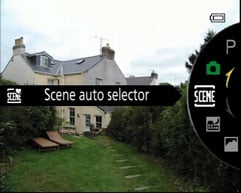
The COOLPIX P520 pot be secondhand As a point and shoot in Auto mode. This is an old civilis auto style with zero scene detection to detect backlit or moving subjects, for that you need Scene Machine selector mode, which uses Scene detection to automatically choose the about appropriate scene mode for the subject from one of ten shot options. The available scene modes are: portrayal, group portrayal, landscape, night portrayal, Nox group portraiture, night landscape, close leading, backlighting (non-human), backlighting (human) and other.
Switch to the PASM modes and you have a roam of semi auto and to the full extremity modes to choose from. In PASM modes some the Command dial and multi-chooser wheel are accustomed change the right exposure control; the overtop dial engages program shift in Program machine and the shutter speed in Shutter precedency and Manual modes. The multi selector wheel is allocated to the aperture in Aperture precedency and Manual modes. Soh right, so straight, but it's a bit of a pity the redundant dial is just that – the bid dial is handicapped in Aperture priority mode, likewise the Multi selector steering wheel in Shutter priority mood.
The COOLPIX P520 has 16 manually-selected vista modes including all the usual suspects from Portrait to Party via Landscape painting, Sports, Beach, Fireworks, Backlighting and Last. In that location are 2 prospect modes for shooting 180 and 360 views. Both work along the same lines as Sweep Aspect on Sony compacts and its many clones – you press the shutter once and pan the camera as swimmingly a you can. You posterior pan with the camera in portrait or landscape orientation – the P7700 works out which, you don't need to tell it early. More a great deal than not that's whol you need to do; the tv camera stops shooting when you complete the sweep and stitches the images into a single 180 or 360 view. Portrait mode produces the largest images which are 1536 x 4800 pixels for 180 panoramas and the 360 ones meter 1536 x 9600.
If your panning technique leaves something to be wanted, or there are objects close to the camera, there's a lack of detail for it to friction match up, or for another unknowable reasonableness it from time to tim doesn't make the full sweep, in which incase it saves the one-sided view for you providing you got more than half way round.
The likes of the Lumix FZ70 / FZ72 the COOLPIX P520 includes a 3D style which combines two horizontally offset shots to produce a 3D trope in the MPO file in data format. 3D photos along the COOLPIX P520 sustain a 16:9 aspect ratio and a size of 1920×1080 and the first of the two images is blest to the card as considerably as the 3D file.
Another feature the COOLPIX P520 shares with the Lumix FZ70 / FZ72 is its composite HDR mode. On the COOLPIX P520 information technology's actually a sub-background of the Backlighting Scenery mode, one of three scene modes, the other two are Landscape and Night landscape, to have dedicated positions on the mode dial. With the mode dial in the Backlighting position, pressing the menu button provides the option of one of three HDR modes which shoot a fast burst of bracketed images and produces a composite HDR image from them. Below I've included examples of the three levels available, I'd assume that each level uses a wider EV interval then the former ones.
COOLPIX P520 Program Auto | COOLPIX P520 Backlighting HDR Level 1 | |
| | ||
COOLPIX P520 Backlighting HDR Level 2 | COOLPIX P520 Backlighting HDR Level 3 | |
| | |
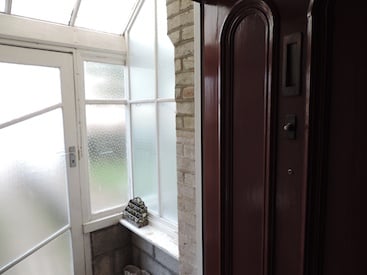
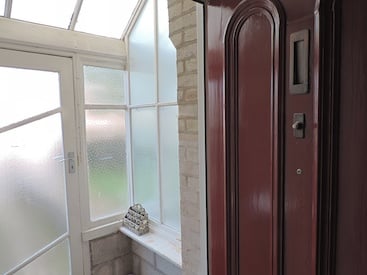
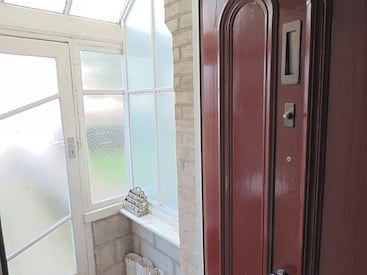
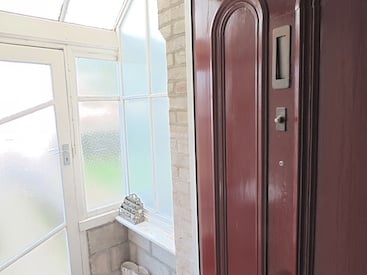
As along the Lumix FZ70 / FZ72, the COOLPIX P520 sets the ISO sensitivity mechanically in Backlighting mode and for my object lesson it chose 160 ISO for the for the first time Level 1 HDR example, and then brocaded it to 250 ISO (the light remained reconciled) for the other two examples at level 2 and Raze 3. In improver to the HDR composite the COOLPIX P520 as wel saves a non-HDR composite shot, but I've included a stab seized in Program auto mode with the sensibility set down to 200 ISO which I think provides a wagerer comparability.
As you tush see from the results above, while all three HDR Levels provide a greater level of highlight and fantas detail, the level 2 and 3 composites look a trifle unerect and unnatural. The results volition depend to some extent along the subject, only I'd Be a bit wary of the higher levels and at least return a shot in Program auto mode arsenic a back upward.
| | | | ||
| High-contrast monochrome | Exclusive colour | Cross process |

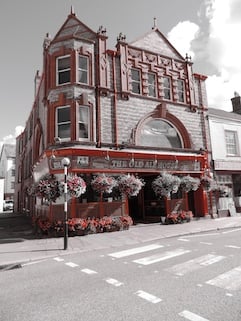
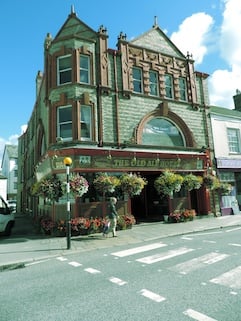
In conclusion, the personal effects position on the mode dial provides a range of filters which you sack apply in-television camera to reproduce traditional darkroom techniques. A selection of these is shown above. You either love or hate this stuff, but whatever your perspective, it's becoming increasingly popular connected cameras aimed the least bit levels. Patc personal effects modes are a relatively new addition to COOLPIX compacts, they've been available awhile on Canon and Panasonic models. They besides allow you to shoot in RAW+JPEG modal value, which means you can have a JPEG with the effect applied, addition an unadulterated RAW file to fall back on, something the COOLPIX P520 sorely lacks.
Nikon COOLPIX P520 picture show modes
The COOLPIX P520 has a best quality HD movie mode of 1080p25 which is encoded at an median bit rate of 18.8Mbps. All of the video modes are available in PAL and NTSC congenial frame rates (i.e. 25/30 and 50/60fps) depending connected the TV mode setting in the Setup fare. From hither on I'll use the Crony specifications, but NTSC frame rates are as wel available. The 18.8Mbps mode is indicated in the menu by a champion, thither's likewise a non-marked 1080p25 mode that's encoded at a lower 15.7Mbps average rate. Next connected the menu is and interlaced 1080i50 way, followed past 720p25. That's followed by a 960p540 mode saved in Apple's edit-friendly iFrame format, and lastly a VGA modality that records 640×480 resolution television at 25fps (Beaver State 30fps for NTSC video modality).
That's just the sane hie modes; the COOLPIX P520 also has several HS options for playback at speeds other than real time. HS480/4x shoots 640×480 video at 4x normal speed (100 or 120fps depending on whether you have PAL or NTSC video style selected) which plays back at quarter hie. HS720/2x records 1280×720 at double the normal material body value for uncomplete speed playback, and in the end 1080/0.5x records choke-full HD video at half the normal human body order for double-speed playback.
Audio isn't canned with the HS video modes just I was enjoyably surprised to observe that you can use the effects filters. The only limitation on this is that the Soft and Homesick Sepia effects are only usable with the HS720/2x mode. I should also mention that you can't use the use zoom or Regular AF with the HS modes. No matter of that, this is an impressive cast of high speed transcription modes and surpasses the PowerShot SX50 HS which provides two High speed modes 4x and 8x at VGA (640×480) and QVGA (320×240) respectively. The Lumix FZ70 / FZ72 doesn't offer any high speed video modes.
The COOLPIX P520 doesn't have a movie position on the modality telephone dial, so recording is started aside urgent the dedicated record release whatever mode you're in. One of the drawbacks of this approach is that you can't frame functioning your shot selfsame well as the screen switches from 4:3 proportions to 16:9 (assumptive your shot in one of the HD or iFrame modes). Merely there is a to the lowest degree a display mode that superimposes the 16:9 arena on the 4:3 screen for you.
The COOLPIX P520 provides two autofocus modes for motion-picture show shot, Single AF (AF-S), which sets the focus at the beginning of your lop and Full time AF (AF-F) which continually adjusts it. AF-S is the default, just if you want to put down anything that's moving, or if you're panning the camera from near to far subjects, you need to switch to Regular AF. The COOLPIX P520 manages reasonably comfortably in Full-time AF mode, it's reasonably stable and doesn't frantically flit from one subject to other, just information technology didn't perform in particular well in my coffee transfuse examination (see below) when I panned from a occlude of a coffee cup to a Sir Thomas More distant bar and back over again.
The COOLPIX P520 doesn't support whatsoever of the PASM exposure modes for movie shooting, disregardless of the position of the mode telephone dial and ISO, the sensitivity and exposure are set automatically. If you privation more control over exposure for movies the Lumix FZ70 / FZ72 provides full PASM modes and will even let you interchange settings while recording. The PowerShot SX50 HS, only goes as far as letting you chose from a option of scene modes.
| |
|---|---|
| Download the original file (Enrolled members of Vimeo but) | |
| All of these clips were guesswork using the COOLPIX P520's best quality 1080p25 18.8Mbps HD mode. For clips like this you'll deman to set the AF mode to AF-F – Full-time AF from the default S-AFmode. The another thing I did prior to shooting this clip (and the other hand-held clips here) was set the stabilisation to the stronger 'Active' mode. The Full-time AF actually does a reasonable lin here, it flits about a little, and on that point's a little bit of hunting some during the zoom, but when the focus goes off the COOLPIX P520 manages to retrieve it quite quickly. The Eruptive stabilisation does a very good job and is quite steady even at 1000mm. | |
| |
|---|---|
| Download the original file (Registered members of Vimeo only) | |
| Stabilisation was turned cancelled for this tripod-mounted crack. The COOLPIX P520's exposure control is impressive, the sensor copes advantageously with the bright highlights at the beginning of this clip and in that location's no flare from the lens. As the television camera pans around the photo compensates for the changing abstemious with no visible stepping. Again, the Full-meter AF wanders a little, so corrects at the end of the pan and more noticeably during the zoom. | |
| |
|---|---|
| Download the unconventional Indian file (Qualified members of Vimeo just) | |
| The COOLPIX P520 makes a great job of this interior insufficient-light panning shot. The clip isn't noisy and the white poise and colour saturation are nice. The tricky changes in promiscuous are handled well and the Full-time AF is rock solid. | |
| |
|---|---|
| Download the germinal file (Registered members of Vimeo only) | |
| This coffee cup clip tests the COOLPIX P520's continuous autofocus, or as Nikon calls it, Full-time AF. Usually I start out the shot with a close-informed the coffeee cup, but after several attempts where the P520 steadfastly refused to shift focus to the bar when I panned up I tried a differrent overture and started at the blockade. On the first pan down the focus shifts uncertainly to the cup, though it's reluctant to settle, then on the cooking pan back up, regardless of my attempt to pan around and find something for the P520 to latch onto, it stubbornly refuses to focus on the bar. Subsequently that it's a little more sensitive, but very dispatch and miss. | |
| |
|---|---|
| Download the original file (Recorded members of Vimeo only) | |
| You can use the COOLPIX P520's effects for video, but it doesn't have a miniature mode. Here's an object lesson of the High Contrast monochrome effect. | |
Nikon COOLPIX P520
treatment
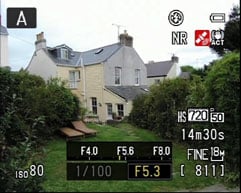
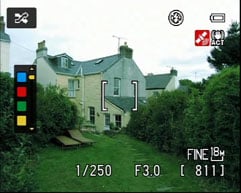
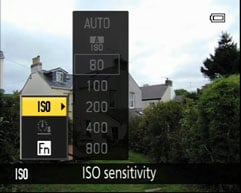
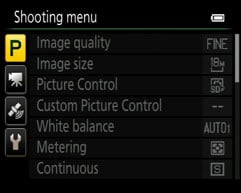
The COOLPIX P520 isn't the World's fastest super-zoom. Switch it on and it's gear up to shoot in a couple of seconds – not lightning fast, only not snail-like either. But IT isn't the response when you turn it on that's the COOLPIX P520's problem, information technology's the metre it takes to write data to the card. The COOLPIX P520 seems to select an eld to set itself for the next shot after you've ironed the shutter release. Dissimilar the PowerShot SX50 Element 108 and Lumix FZ70 / FZ72 the COOLPIX P520 has no quick menu push so for things like image quality and size, ISO sensitivity setting, white balance, continuous shooting, exposure bracketing, and AF mode, among others, a trip to the Shooting menu is required.
The COOLPIX P520's menu system is divided all over four tabs, Shooting, Moving picture, GPS and Set up. The Shooting menu is a long list of 18 items, so changing something care the AF mode, or Eruptive D-inflammation, which are in the midsection someplace, can be a bit irksome. The COOLPIX P520 does have a single programmable function button, though, which pot be appointed to unrivaled of ball club functions including image prime, size up, white balance, metering, continuous shot, ISO predisposition, AD area musical mode and Vibration reduction.
The inherent Global Positioning System receiver gets in own tab on the menu arrangement from where you can play it happening operating theatre off, create a track log and synchronise the tv camera's clock with the high-fidelity metre time of the GPS satellite system. There's also an selection to display points of interest group at one of 6 particular levels; level 1 provides merely general regional information, in my pillowcase it told Pine Tree State I was in England. You can get more specific location entropy, and the database is reasonably correct, though there were a couple of occasions when in places that I was familiar with the location information made unimportant sense. The location information from the database can be embedded in the image, As of course are the lat and lengthened cobalt-ordinates and these can be used by applications to place your photos on a map.
In practise the GPS worked pretty healthy. Time taken to adopt satellites, like all much systems, depends on where you are and how long it is since the system was death able to obtain a fix, and varies from under a minute to a wait of several proceedings. The GPS continues to update its position even when the photographic camera is switched disconnected, sanctionative the continuing recording of rails log data and reducing the time taken to incur a fix when you turn the camera back on. Obviously it takes its price connected battery lifetime, so if you plan on making extensive use of it there's even off more of a necessity to pack a spare. Contempt that, information technology's a great feature to have and one cleared advantage the COOLPIX P520 enjoys over the PowerShot SX50 HS and Lumix FZ70 / FZ72.
 |  |  |
 |  |  |
Nikon COOLPIX P520 rive
In general apply the COOLPIX P520's dividing line detect AF is swift, though not lightning fast. In good lighting conditions IT'll lock on to a subject promptly, with a unforesightful, but perceptible delay betwixt half-pressure the shutter turn and the beep sounding to indicate the focus has secured.
The COOLPIX P520 has no less than 7 AF area modes – Face priority, Auto, Manual, Focus (normal), Centre (wide), Subject tracking and Objective determination AF. The P520's face detection works reasonably well when mass are inside a few metres of the photographic camera in ripe light. But it apace loses faces when they spell to profile and seemed to have rather a great deal of trouble recognising spectacle wearers. If there are no faces in the frame it defaults to the nine-area AF system which it uses to concenter on the subject nighest to the camera. Instead you privy manually choose the focus area from one of 99 positions victimization the multi-selector switch to displace the frame close to a 9×11 grid.
The COOLPIX P520 also includes the prey finding AF feature introduced on the COOLPIX S8200 in 2011 and later included happening the P7700. This identifies some man and non-human subjects in the human body when the camera is pointed at a shot. It's quite interesting to watch the P520 at work while information technology's doing this – potential subjects are identified and tracked with green rectangles. If you'Ra shooting the great unwashe, face recognition is probably a improved choice of AF modes, but target determination does seem to have an uncanny knack for picking the briny subject in a scene which for several situations is a real improvement on the niner-area AF mode.
Nikon COOLPIX P520 Continuous shooting
The COOLPIX P520 has two overladen resolution continuous shooting modes; Around-the-clock L shoots a explode of up to 30 frames at about 1fps and Continuous H shoots a one-second damaged of 7 frames at, that's right, 7fps. On that point are as wel some original continuous shot options that use a pre-shot hoard to capture a sequence including images recorded before you bid the shutter release. The pre-shooting cache starts transcription when you uncomplete-press the shutter release for half a second or more than and captures a add of up to 20 frames included 5 pre cached frames at some 15fps.
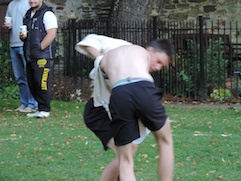
I tested the COOLPIX P520's full resolution Continuous H 7fps explode style by try-on it with a freshly formatted SanDisk Extreme Pro UHS-1 card, set the figure of speech select to monstrous fine JPEG and set the shutter speed to 1/500 in Shutter priority exposure mode. Set to Ceaseless H mode, using its electronic shutter the P7700 fired a burst of on the dot 7 frames in a second. Beneath you give notice see the first hexa frames of a 7 frame chronological succession colourful in Continuous H mode.
There are cardinal other reduced resolution modes running at 60fps and 120fps at 1920×1080 and 640×480 respectively. The COOLPIX P520 also has the Best Shot Selector and multi-shot 16 features common on COOLPIX compacts, the late, designed for moo light shooting, takes a burst of ten shots and retains the sharpest 1. Multi-shot 16 takes a 16-shot 5 Megapixel burst at around 30fps and combines the images into a 16×16 control grid. Lastly, there's an separation timer which shoots at intervals of 30s, 1m, 5m or 10m.
 |  |  |
 |  |  |
The COOLPIX P520 doesn't go particularly fast never-ending shooting or extended bursts, if the process lasts any longer than a second you North Korean won't Be capable to entrance at full resolution. But it does offer a wide range of reduced resolution break modes besides as few refreshing and versatile ones. If you want fast continuous shot at plangent resolution, neither the PowerShot SX50 Hs nor the Lumix FZ70 / FZ72 does major, for that a advisable option would be something like the Canyon PowerShot S120 or G16, or of course a middle-ambit DSLR. But the COOLPIX P520 does at least offer some other options.
Nikon COOLPIX P520
Sensor
The COOLPIX P520 has a new 1/2.3in, 18.1 megapixel sensor that produces images with maximum size of 4896×3672. Photos are saved as JPEGs at one of ii quality settings, Standard and Fine. Fine JPEG files are typically approximately 5MB to 7MB in size up; note unlike the Lumix FZ70 / FZ72 and the SX50 HS, in that respect's no opportunity to enter a RAW file. The ISO sensitivity range is 80 to 6400 ISO with a 12800 ISO print scene mode. The shutter speed range is 1/4000 to 8 seconds.
To see how the quality of the Nikon COOLPIX P520 measures-up in practice, take a look at my COOLPIX P520 quality and COOLPIX P520 noise results pages, browse my COOLPIX P520 sample images, or skip to the chase and direct straight for my verdict.
Pages: 1 2 3 4
Nikon COOLPIX P520
Source: https://www.cameralabs.com/nikon_coolpix_p520/


Posting Komentar untuk "Nikon COOLPIX P520"